






Amazing trip, thoughtful logistics, and a guide who made Machu Picchu unforgettable.
Thi W TripadvisorSignature Peru Tour
Salkantay Trek to Machu Picchu 5 Days via Llactapata
Slogan Here
StartsStarts at
DurationDuration
Physical LevelEasy
SitesCusco, Soraypampa
Trip Overview
The Salkantay Trek is made for travelers who want Machu Picchu after real effort, not only after a train ride.
For five days, this route moves from cold Andean valleys to glacial lakes, high mountain passes, cloud forest, coffee land, Inca paths, and finally Machu Picchu. The body works hard, the air changes every day, and the land shifts from sharp mountain cold to warm jungle humidity.
This version follows the well-known 5-day route via Llactapata, with Humantay Lake, the Apacheta Pass, coffee fields in Lucmabamba, the first far view of Machu Picchu from Llactapata, and a final hotel night in Aguas Calientes before entering the Inca citadel.
With Elvis Adventures, the trek is planned with guide service, mountain transport, meals, trekking support, equipment, hotel, Machu Picchu ticket, bus tickets, train return, and clear assistance before departure.
Machu Picchu spaces sell fast, especially in high-demand months. If you want a stronger circuit, better train timing, and a smoother trek plan, booking early gives you a much better chance.
Day by Day Schedule
Highlight of the day: Begin the Salkantay route with the walk from Challacancha to Soraypampa and the afternoon hike to Humantay Lake.
The trek begins early in Cusco. The first hours are cold, and the city is still quiet when the transport leaves. After pickup from your hotel or an agreed meeting point, you travel toward the Mollepata area for breakfast.
After breakfast, the vehicle continues toward Challacancha, where the walking route begins. The first section follows a mountain path with views of valleys, streams, and rural land. Some parts pass near old water channels and open Andean slopes.
The walk toward Soraypampa takes around three hours. The trail is not the hardest part of the trek, but the altitude is already present. The ground may include compact dirt, stones, dry grass, and short uneven sections.
At Soraypampa, you settle into the first camp area. Depending on the confirmed service, this may be a dome-style camp or a trekking camp near the Salkantay range. The air is cold, and the views of Humantay and Salkantay mountains give the day a strong mountain feeling.
In the afternoon, you hike to Humantay Lake. This section is shorter but steeper. The climb can feel demanding because the lake sits high and the body is still adjusting. The path includes dirt, stones, uphill slopes, and possible mud in rainy months.
At the lake, the water changes between blue and green tones depending on sun, cloud, and wind. The area can be cold and windy, so a jacket is useful even if the climb felt warm.
After time at the lake, you return to camp for hot drinks, dinner, and rest.
Technical details
- Transport: Tourist vehicle from Cusco to Challacancha
- Walking distance: Around 9.6 km / 6 mi
- Hiking time: Around 6 hours total
- Walking level: Moderate
- Trail surface: Compact dirt, stones, uphill path, grassland, and possible mud
- Climate: Cold morning, strong sun at times, cold night
- Meals: Breakfast, lunch, afternoon tea, and dinner
- Accommodation: Dome-style camp or mountain camp depending on service
- Important note: The Humantay Lake climb is short but demanding due to altitude

Highlight of the day: Cross the highest point of the trek at Apacheta Pass and descend from glacier country toward the cloud forest zone.
Day 2 is the hardest day of the trek. The morning begins with cold air and a hot drink before breakfast. After eating, the trail starts climbing toward the high pass.
The route rises through open mountain terrain with dirt paths, stones, and strong views of the surrounding peaks. Breathing can feel heavier as you move higher. The guide will keep a steady pace, because rushing here makes the climb harder.
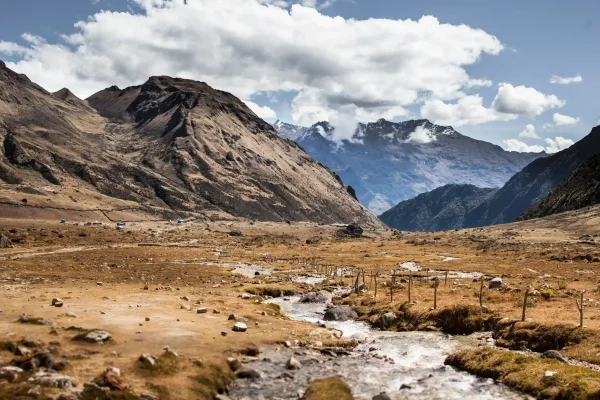
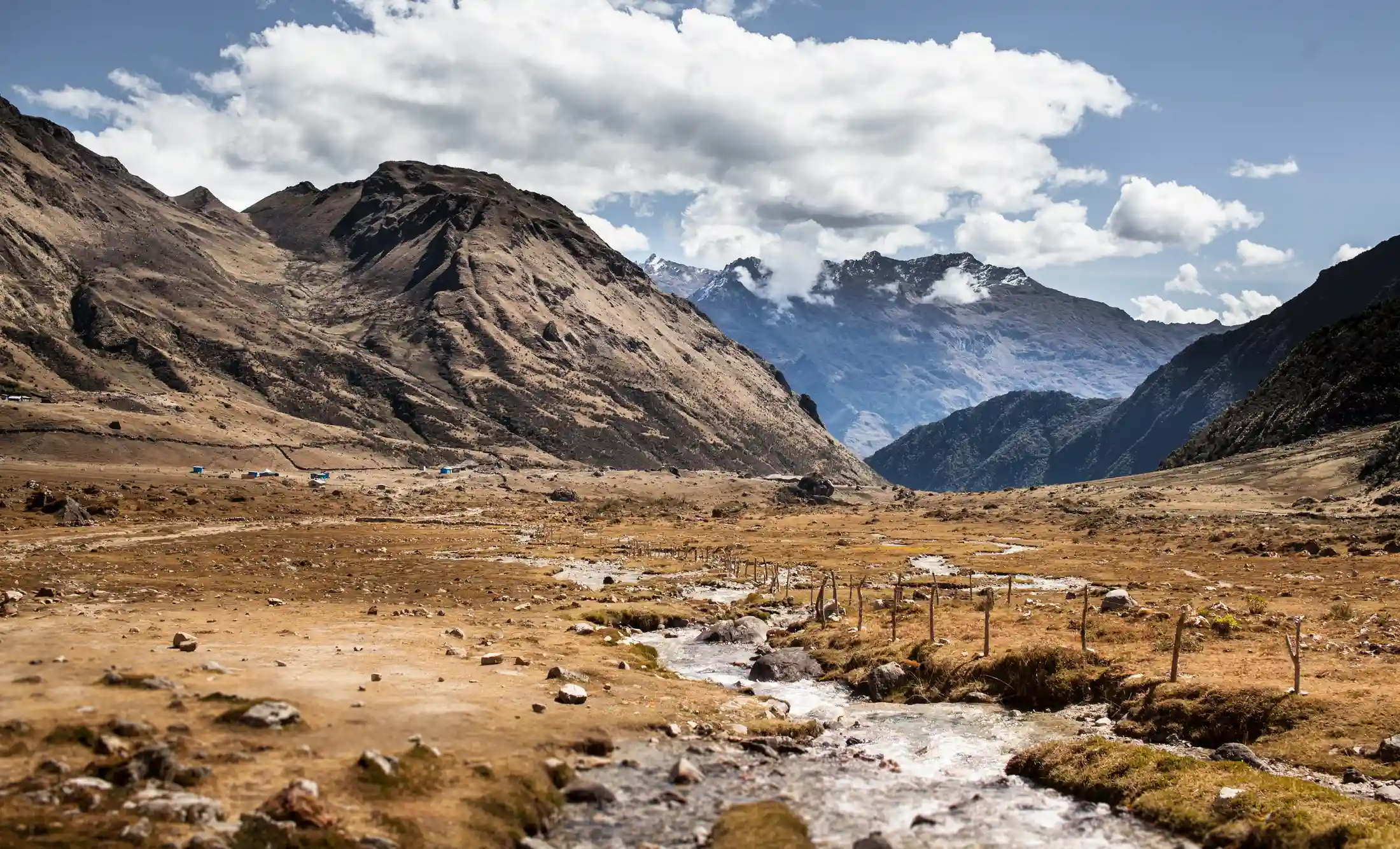
The main point of the day is Apacheta Pass, around 4,650 m / 15,367 ft. From this area, you can see Salkantay, Humantay, Huayanay, high valleys, rivers, and mountain slopes when the weather allows it.
Near the pass, wind can be strong and cold. Short pauses help the body adjust, but it is important not to stay too long if the weather turns rough.
After the pass, the route may include a side walk toward Salkantay Lake, a high turquoise lagoon surrounded by mountain terrain. This section depends on timing, weather, and group condition.
Then the trail descends toward Rayanniyoc for lunch and continues lower toward Colpapampa. This descent is long and can be tough on the knees. The ground changes from cold mountain trail to warmer cloud forest, with more vegetation, humidity, and softer air.
At Colpapampa, the camp is prepared. Depending on the confirmed service, travelers may stay in camping facilities or dome-style accommodation. The night is warmer than Soraypampa, and the land begins to feel closer to the jungle.
Technical details
- Transport: No road transport during the trekking section
- Walking distance: Around 16 km / 10 mi
- Hiking time: Around 8 hours
- Highest point: Apacheta Pass, around 4,650 m / 15,367 ft
- Walking level: Challenging
- Trail surface: Dirt paths, loose stones, high pass terrain, long descents, wet sections
- Climate: Cold and windy at the pass, warmer near Colpapampa
- Meals: Breakfast, lunch, afternoon tea, and dinner
- Accommodation: Camping facilities or dome-style camp depending on service
- Important note: This is the most physically demanding day due to altitude and descent
Highlight of the day: Walk from the high jungle edge toward Lucmabamba and take part in a local coffee activity.
Day 3 feels different from the first two days. The cold mountain air gives way to a warmer, greener environment. The trail moves through the cloud forest and lower valley areas where birds, fruit trees, cacao, and coffee plants appear along the route.
The walking is moderate, but the humidity can make the body feel warmer. The ground may include dirt paths, muddy sections, small stones, narrow trails, and rural road sections depending on the conditions of the day.
As you move toward Lucmabamba, the route passes fruit plantations, flowering orchards, coffee trees, and small local farms. This is a good day to notice how quickly the land changes after leaving the Salkantay pass behind.
After reaching the Lucmabamba area, lunch is served and there is time for a coffee activity near the campsite. Travelers can learn how coffee is grown and processed, from the plant to the cup. Depending on the local family and season, you may see coffee plants, pick beans, roast them, grind them, and drink freshly brewed local coffee.
The afternoon is lighter compared with Day 2. The camp area in Lucmabamba is warmer, greener, and more rural. Dinner may include local products depending on what is available and what the cooking team has planned.
Technical details
- Transport: Trekking route on foot
- Walking distance: Around 14 km / 8.7 mi
- Hiking time: Around 5 to 6 hours
- Walking level: Moderate
- Trail surface: Dirt paths, cloud forest trail, rural road sections, mud, and stones
- Climate: Warm, humid, and greener than previous days
- Meals: Breakfast, lunch, afternoon tea, and dinner
- Accommodation: Camping facilities
- Important note: This day includes coffee land and lower valley terrain
Highlight of the day: Walk an old Inca path to Llactapata and see Machu Picchu from across the valley before reaching Aguas Calientes.
Day 4 is long but deeply rewarding. The day begins in Lucmabamba and follows an old Inca path toward the Puncuyoc Pass and then Llactapata.
The first section climbs through warm vegetation, coffee land, fruit areas, and valley views. The trail may include dirt, stones, old Inca path, roots, and muddy parts depending on the season. The climb can feel strong because of humidity and the accumulated effort from previous days.
After around three hours of uphill walking, you reach Llactapata Inca site. This place sits across the valley from Machu Picchu and gives a powerful first view of the citadel, Huayna Picchu, Machu Picchu Mountain, and the Aobamba Canyon when the sky is clear.
This moment changes the mood of the trek. Machu Picchu is no longer just a final goal; it is visible from the trail.
After Llactapata, the path descends toward Hidroelectrica. This descent can take around two hours and may feel hard on the knees, especially if the ground is wet or loose. Walking poles can help.
Lunch is usually served near Hidroelectrica. After lunch, the final walking section follows the route toward Aguas Calientes, near the railway and the edge of the Machu Picchu National Park area. The terrain is mostly flatter, but the day is already long.
The path moves through warm subtropical vegetation, with orchids, epiphytes, river sounds, and green slopes around the valley. After reaching Aguas Calientes, you check into your hotel and later have dinner in town.
Technical details
- Transport: Trekking route on foot
- Walking distance: Around 14.5 km / 9 mi
- Hiking time: Around 9 hours
- Walking level: Moderate to challenging
- Trail surface: Old Inca path, dirt, stones, roots, downhill sections, railway-side path
- Climate: Warm and humid
- Main places: Lucmabamba, Puncuyoc Pass, Llactapata, Hidroelectrica, Aguas Calientes
- Meals: Breakfast, lunch, and dinner
- Accommodation: Hotel in Aguas Calientes
- Important note: This is a long walking day with a strong climb and a long descent
Highlight of the day: Enter Machu Picchu with your guide and return to Cusco by train through the Urubamba Valley.
The final day begins early in Aguas Calientes. After breakfast at the hotel, you take the official bus up to Machu Picchu. The ride takes the winding road from town to the entrance gate.
At the entrance, your passport and ticket will be checked. The guided route depends on the circuit confirmed at booking. Machu Picchu now works with controlled circuits, so travelers must follow the route printed on their ticket.
If Circuit 2 is available, it is usually the strongest option for travelers who want a fuller route through the citadel. If Circuit 2 is sold out, alternatives may include Circuit 1B or Circuit 3B, depending on the official spaces available for the date.
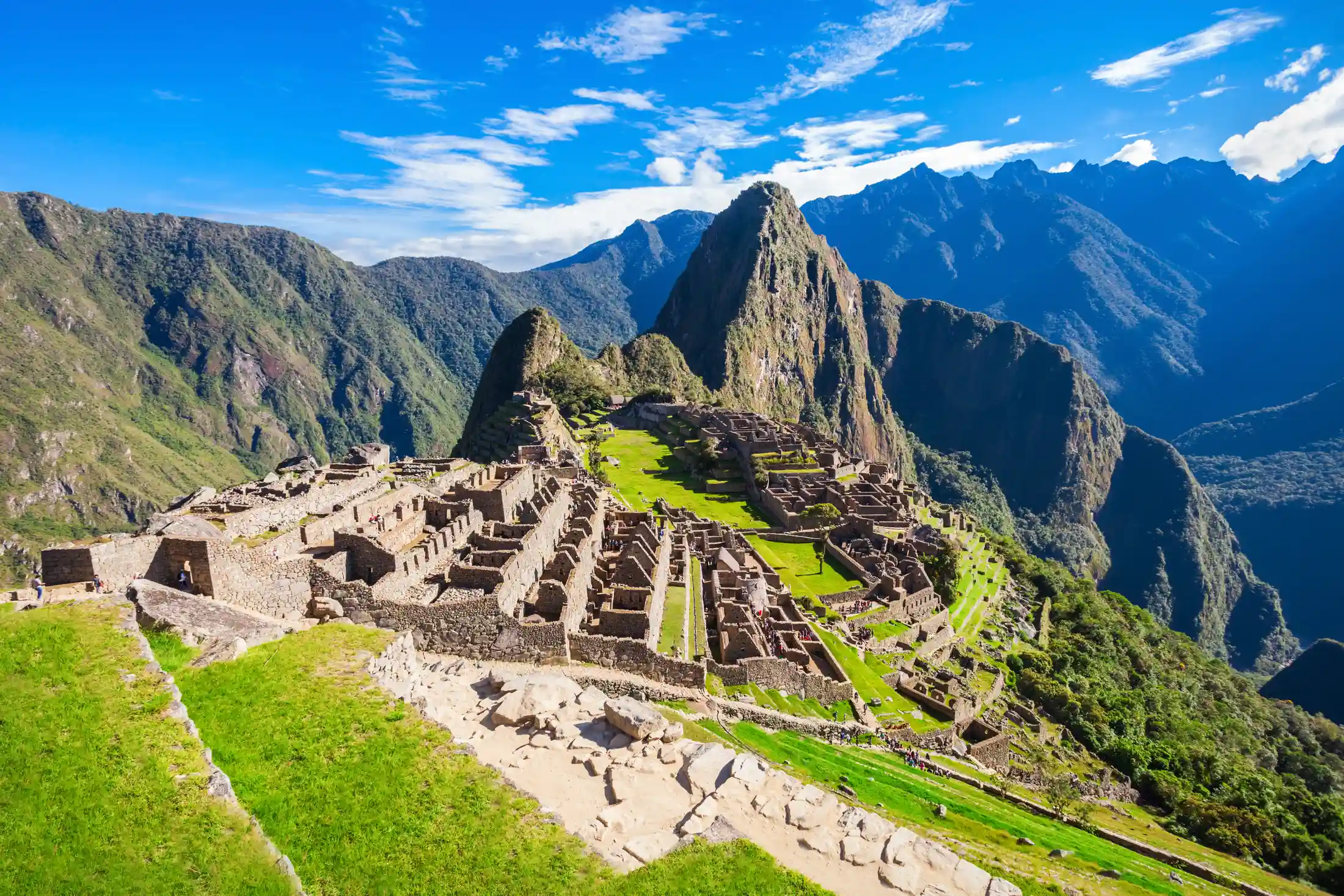
Your guide will explain the main sectors of Machu Picchu, including the agricultural terraces, residential areas, ceremonial zones, stonework, water channels, and the way the city was planned between the mountains.
After the guided route, you return by bus to Aguas Calientes. Lunch is usually not included on the final day, so travelers can eat in town depending on train timing.
Later, you board the Expedition train to Ollantaytambo. Common return times may include afternoon departures, depending on availability. The train follows the Urubamba River through the valley. Once in Ollantaytambo, tourist transport takes you back to Cusco.
Arrival in Cusco is usually in the evening, depending on train schedule, railway operation, road traffic, and weather.
Technical details
- Transport: Official bus, train, and tourist vehicle
- Walking level: Easy to moderate
- Guided time inside Machu Picchu: Around 2 hours, depending on circuit
- Trail surface: Stone steps, terraces, compact dirt, and uneven Inca stone
- Climate: Humid near Machu Picchu, cooler on return to Cusco
- Meals: Breakfast only
- Accommodation: Not included after return to Cusco
- Important note: The Machu Picchu circuit depends on official availability at booking
Inclusions
What’s Included
- Pre-tour briefing in Cusco
- Hotel pickup in Cusco city center or agreed meeting point
- Tourist transport from Cusco to the trek starting area
- Professional guide in English or Spanish
- Cook during the trek
- Muleteers and horses for equipment and main supplies
- Horse-carried personal allowance, usually up to 7 kg
- Duffel bag for trek belongings
- Camping facilities or dome-style stays depending on confirmed service
- Comfortable foam mattress
- Meals during the trek according to itinerary
- Breakfast on Day 5
- Dinner in Aguas Calientes
- Boiled water at meal times when operation allows
- First aid kit
- Oxygen for emergency use
- Machu Picchu entrance ticket, subject to availability
- Guided tour of Machu Picchu
- Official bus ticket from Aguas Calientes to Machu Picchu
- Official bus ticket from Machu Picchu to Aguas Calientes
- Hotel in Aguas Calientes with private room and bathroom
- Train ticket from Aguas Calientes to Ollantaytambo
- Tourist transport from Ollantaytambo to Cusco
- Pre-tour assistance from Elvis Adventures
What’s Not Included
- Walking poles
- Sleeping bag, unless stated in your confirmation
- Lunch on the last day in Aguas Calientes
- Drinks and personal snacks
- Travel insurance
- Vistadome train upgrade
- Huayna Picchu Mountain ticket
- Single supplement
- Hotel upgrade in Aguas Calientes
- Extra horse support
- Tips for guide, cook, muleteers, drivers, or hotel staff
- Personal expenses
- Services not clearly listed as included
More Tour Information
- Tour name: Salkantay Trek to Machu Picchu 5 Days via Llactapata
- Duration: 5 days and 4 nights
- Start: Cusco
- End: Cusco
- Main route: Cusco, Challacancha, Humantay Lake, Soraypampa, Apacheta Pass, Colpapampa, Lucmabamba, Llactapata, Hidroelectrica, Aguas Calientes, Machu Picchu
- Service type: Group or private
- Accommodation: Mountain camps or dome-style camps depending on service, plus 1 hotel night in Aguas Calientes
- Transport: Tourist vehicle, trekking route on foot, Machu Picchu bus, train, return tourist vehicle
- Support team: Guide, cook, muleteers, horse support, driver
- Walking level: Challenging
- Physical demand: High due to altitude, long days, climbs, descents, and changing climates
- Highest point: Apacheta Pass, around 4,650 m / 15,367 ft
- Machu Picchu altitude: Around 2,430 m / 7,972 ft
- Approximate total walking distance: Around 54 km / 33.5 mi, depending on route operation
- Trail surface: Compact dirt, stones, grassland, muddy sections, Inca path, cloud forest trail, road sections, and railway-side walking
- Climate: Cold in high mountain areas, warmer and humid in lower valleys
- Best months: April to October for drier trail conditions
- Rainy season: Usually November to March
- Meals: Meals during the trek included according to itinerary
- Recommended acclimatization: At least 2 days in Cusco or the Sacred Valley before the trek
- Not recommended for: Travelers with serious heart issues, severe altitude sensitivity, recent surgery, strong knee problems, major mobility limits, or pregnancy
- Reach Humantay Lake on the first day — turquoise glacial water, cold mountain air, and the first strong climb of the trek set the tone before sleeping near the Salkantay range.
- Cross Apacheta Pass at high altitude — the trail reaches one of the hardest points of the route, with close views of Salkantay, Humantay, Huayanay, valleys, rivers, and mountain lakes.
- Move from glacier land to cloud forest — the trek changes every day, from cold high passes to warmer valleys with birds, fruit trees, cacao, coffee, orchids, and thick green slopes.
- Spend time in Lucmabamba coffee country — travelers can learn how coffee is grown, picked, roasted, ground, and brewed in one of the warmer sections of the route.
- Walk to Llactapata Inca site — this place gives one of the best far views of Machu Picchu, Huayna Picchu, and the Aobamba Valley before reaching Aguas Calientes.
- Enter Machu Picchu on the final day — after four days on foot, the citadel feels earned. Your guide leads the confirmed circuit and explains the main sectors of the Inca city.
- Return by train from Aguas Calientes — after the Machu Picchu route, the train follows the Urubamba River back toward Ollantaytambo, where transport continues to Cusco.
- Good balance of effort and comfort — the trek includes mountain camps or dome-style stays depending on the confirmed service, plus a hotel night in Aguas Calientes.
- Travel with support for your main gear — horses and muleteers carry camping equipment and allowed personal items, so you walk with a day backpack.
- A strong private service option — private service gives better pace control, more room for pauses, closer guide support, and better adjustment for food and walking rhythm.
If you need medical equipment, a service animal, crutches, professional filming gear, drones, or special photography equipment, you must inform the Elvis Adventures reservations team in advance.
Some items may require permits, special transport, route adjustment, or may not be allowed in Machu Picchu or certain protected areas.
Notes About Our Elvis Adventures Service
Hotel Pickup
Pickup is usually arranged from hotels in Cusco’s main tourist area. If your hotel is located on a narrow street where vehicles cannot enter, we will set a nearby meeting point.
For private service, pickup timing may be adapted to the route plan. For group service, pickup time is fixed and must be followed carefully.
Luggage Storage
Large luggage should stay at your hotel in Cusco or in a safe storage point arranged before departure.
For the trek, you will carry a day backpack with water, rain gear, warm jacket, sunscreen, snacks, camera, passport, and personal medicine.
Your main trek items will go in the duffel bag carried by horses. The usual personal weight allowance is up to 7 kg. You will not have access to this duffel during the walking day because the horse team normally moves ahead of the group.
Payment Conditions
A deposit or full payment is required to secure guide, cook, muleteers, horses, transport, food, camping or dome-style facilities, hotel in Aguas Calientes, Machu Picchu ticket, bus tickets, and train return.
This trek requires more planning than a day tour. Food must be purchased, equipment prepared, horses assigned, hotel booked, train seats checked, Machu Picchu tickets secured, and safety gear reviewed before departure.
Once tickets, hotel, train, trekking team, and equipment are confirmed, changes or cancellations may involve costs because local workers, suppliers, and official spaces are reserved in advance.
The remaining balance, if any, must be paid before the trek or according to the agreement made with the Elvis Adventures reservations team.
If you renew your passport after booking, bring both the old and new passport to avoid entry issues.
Return From Machu Picchu to Cusco
After your guided route inside Machu Picchu on Day 5, you will take the official bus down to Aguas Calientes.
Depending on your return train time, you may have time for lunch or a short walk through town. Lunch on the final day is usually not included.
Later, you board the Expedition train from Aguas Calientes to Ollantaytambo. Once you arrive at Ollantaytambo station, tourist transport takes you back to Cusco.
Arrival in Cusco is usually in the evening. The exact time depends on train schedule, railway operation, road traffic, weather, and season.
Availability
The Salkantay Trek 5 Days is available most of the year, depending on weather, road access, camp conditions, guide availability, horse team availability, hotel space, train seats, and Machu Picchu ticket availability.
The best season is usually from April to October, when trail conditions are drier. Nights near Soraypampa can still be very cold.
From November to March, rain, fog, mud, slippery trails, and possible landslides may affect the route. During this period, the guide may adjust the route for safety.
Machu Picchu availability is controlled by official tickets, circuits, entry times, and visitor capacity. We recommend booking up to 6 months in advance, especially if you want Circuit 2 or if you travel from April to October.
If Circuit 2 is not available, Elvis Adventures may offer Circuit 1B or Circuit 3B depending on official spaces. Only one Machu Picchu circuit is included in the standard tour.
Useful Information
Salkantay Mountain
Salkantay is one of the highest mountains in the Cusco region and is deeply respected by Andean communities. The trek does not climb the summit. It crosses the mountain route below the glacier slopes and passes through high valleys linked to the Salkantay range.
Humantay Lake
Humantay Lake sits below Humantay Mountain. It is reached by an uphill hike from the Soraypampa area.
The water color changes with sunlight, cloud, wind, and minerals. The climb can feel hard because of altitude, even though the distance is not very long.
Apacheta Pass
Apacheta Pass is the highest point of this trek, around 4,650 m / 15,367 ft. It is usually the hardest point of Day 2.
Wind, cold, altitude, and steep terrain make this section demanding. The guide will manage the pace carefully.
Cloud Forest
After the high pass, the route descends toward warmer valleys. This section has more vegetation, humidity, birds, fruit trees, coffee, cacao, and muddy trail parts during rainy months.
The body feels the change quickly: less cold, more humidity, and softer air.
Lucmabamba Coffee Activity
Lucmabamba is one of the warmer and greener parts of the trek. The coffee activity may include learning about the plant, harvest, roasting, grinding, and brewing process.
The activity depends on local operation, season, and timing.
Llactapata
Llactapata is an Inca site located across the valley from Machu Picchu. It gives one of the strongest far views of the citadel, Huayna Picchu, and the Aobamba Canyon.
This site is one of the main reasons to choose the 5-day route via Llactapata.
Accommodation
The trek includes mountain camps or dome-style stays depending on the confirmed service, plus one hotel night in Aguas Calientes.
The hotel in Aguas Calientes includes a private room and bathroom. Hotel upgrades may be available for an additional cost.
Trains to Machu Picchu
The return usually includes the Expedition train from Aguas Calientes to Ollantaytambo. Train times depend on availability and may vary by season.
A Vistadome upgrade may be requested for an additional cost. Train companies apply small luggage limits, so large suitcases should not be taken on the train.
Machu Picchu Circuits
Machu Picchu is controlled by official circuits. Travelers cannot enter any route they want once inside; they must follow the circuit printed on the ticket.
Common options may include:
- Circuit 2A or 2B: Strong classic-style options when available.
- Circuit 1B: Panoramic route often used when classic circuits are sold out.
- Circuit 3B: Lower route that may be used depending on ticket availability and traveler needs.
Only one Machu Picchu circuit is included in the standard tour. Extra routes or mountain hikes must be requested in advance.
Food During the Trek
Meals are included during the trek according to the itinerary. The cooking team prepares warm food for high-altitude walking and lower-valley humidity.
Typical meals may include soups, rice, pasta, vegetables, potatoes, eggs, grains, hot drinks, pancakes, bread, fruit when possible, chicken, trout, and vegetarian options when requested.
Dietary needs must be informed in advance. Private service allows better food adjustment.
Travel Restrictions
Strikes and Demonstrations
Strikes and demonstrations are common in Peru, and they may interrupt tours and treks. Roads can be blocked, train tracks may be affected, and transport may change without much notice.
If this happens, Elvis Adventures will try to keep your trek as close as possible to the original plan. In some cases, this may require leaving earlier, changing transport timing, or adjusting logistics.
Under these circumstances, tours may also be canceled or changed. In case of changes or cancellations, our operations team will coordinate with you directly. Your safety is always the main priority.
Lost Objects
Please pay attention to where you leave your belongings and remember to take everything once you leave our transport, campsites, tents, dining areas, hotel, train, bus, restaurants, or waiting points.
Each traveler is responsible for personal belongings during the trek. Elvis Adventures is not responsible for lost items left in public areas, vehicles, campsites, tents, hotels, trains, buses, restaurants, or route stops.
Health and Physical Conditions
This trek takes place at altitude and includes long walking days, steep climbs, long descents, cold camps, humid valleys, muddy paths, uneven ground, and several days away from immediate city services.
It is not recommended for travelers with serious heart conditions, severe asthma, recent surgery, strong vertigo, severe altitude sensitivity, strong knee problems, back problems, or major mobility limitations.
Older travelers should have approval from their doctor before booking. Private service is usually better for older travelers because the pace can be adjusted.
Pregnant travelers should not take this trek due to altitude, uneven terrain, long walking days, remote camp conditions, and limited medical access.
If you feel headache, nausea, chest pressure, dizziness, strong weakness, confusion, or breathing difficulty during the trek, tell the guide immediately.
Emergency and Route Change Note
The guide may change the walking pace, camp plan, route, return timing, or operational plan if weather, health, trail damage, roadblocks, railway issues, or official restrictions make the original plan unsafe.
On the Salkantay route, safety comes before keeping the exact plan.
Final Booking Note
To book this trek, Elvis Adventures needs your full name, passport number, nationality, date of birth, travel date, hotel name in Cusco, preferred service type, dietary notes, health notes, and any gear rental request.
The Salkantay Trek to Machu Picchu 5 Days via Llactapata is one of the strongest trekking routes in Peru for travelers who want Humantay Lake, Salkantay Pass, cloud forest, coffee land, Llactapata, Aguas Calientes, Machu Picchu, and a train return to Cusco after a real mountain journey.
Clothing
- Warm down jacket or insulated jacket
- Fleece or thermal mid-layer
- Breathable hiking shirts
- Thermal base layer for cold nights
- Waterproof rain jacket
- Rain poncho
- Comfortable trekking pants
- Waterproof pants during rainy season
- Gloves
- Warm hat
- Sun hat or cap
- Neck warmer or buff
- Sunglasses with UV protection
- Hiking boots with ankle support and good grip
- Extra trekking socks
- Sleepwear for camp
- Comfortable shoes for camp
- Swimsuit if hot springs are added
Travel Items
- Day backpack, around 30 to 40 liters
- Duffel bag for horse-carried items
- Reusable water bottle or hydration bladder
- Headlamp with extra batteries
- Power bank
- Personal snacks
- Dry bags or plastic bags for wet clothing
- Quick-dry towel
- Hand sanitizer
- Toilet paper
- Wet wipes
- Sunscreen
- Lip balm
- Insect repellent
- Personal toiletries
- Camera, if desired
- Cash in Peruvian soles
Documents
- Original passport
- Travel insurance details
- Student card, if applying for student discount
- Booking confirmation from Elvis Adventures
- Emergency contact information
- Medical notes if relevant
Personal Medication
- Personal medicine in original packaging
- Altitude support medicine, only if approved by your doctor
- Pain relief medicine recommended by your doctor
- Stomach medicine
- Motion sickness tablets, if needed
- Allergy medication, if needed
- Inhaler, if prescribed
- Blister care
- Small personal first aid items
Months Before the Trek
- Train with uphill walks and long descents before traveling. This trek is physically demanding.
- Spend at least 2 days in Cusco or the Sacred Valley before starting the trek.
- Speak with your doctor if you have heart problems, asthma, blood pressure issues, anemia, knee problems, back problems, vertigo, or previous altitude sickness.
- Choose private service if you want a slower pace, stronger support, or better meal control.
- Buy travel insurance that covers high-altitude trekking and emergency evacuation.
- Send passport information exactly as shown on your document. Machu Picchu tickets are issued with personal data.
- Tell the reservations team about dietary needs, allergies, medical conditions, or past altitude issues.
A Few Days Before the Trek
- Attend the pre-tour briefing in Cusco.
- Sleep well before departure.
- Avoid heavy alcohol before the trek.
- Eat light meals the day before the trek.
- Prepare warm clothing for Soraypampa and the high pass.
- Prepare insect repellent for the warmer lower valleys.
- Pack only what is needed. Extra weight makes walking harder.
- Bring cash in Peruvian soles for snacks, drinks, tips, hot springs if added, or personal needs.
- Confirm your pickup point with Elvis Adventures.
- Keep your passport in your day backpack.
During the Trek
- Walk slowly from the first day. A fast start can make Day 2 harder.
- Drink water in small amounts throughout the day.
- Use layers. You may feel cold in the morning, warm while climbing, and cold again at camp.
- Tell the guide immediately if you feel headache, nausea, chest pressure, dizziness, strong weakness, or breathing difficulty.
- Respect local families, animals, coffee land, camps, and trail rules.
- Do not leave trash on the trail.
- Stay on marked paths when possible.
- Protect your knees during long descents.
- Keep rain gear close, especially in cloud forest and rainy season.
- Accept route changes if weather, health, or trail conditions require it.
Require More Information
Contact Us
Let our local experts help you choose the perfect Peruvian adventure.
Traveler Reviews